Can You Wear a Wig Over Dreadlocks or Braids? Expert Tips


The wig is rarely the reason a style fails over locs or braids. The base underneath is: height at the crown, tension at the edges, and trapped moisture under the cap are what push a wig back, create bulk, or break hair.
The short answer is yes, you can wear a wig over dreadlocks or braids, and it is one of the most common protective styling pairings in textured hair care. A wig sits cleanly over 6 to 10 flat cornrows or a smooth loc wrap with an average 22.5 inch (57 cm) cap, or a 23.5 inch (60 cm) large cap for dense mature locs.
| Photo | Popular Hair Product | Price |
|---|---|---|

|
Kkioor 24 Inch Chocolate Brown Human Hair Wig 200 Density Body Wave Lace Front Wigs Human Hair Pre Plucked 13X4 HD Frontal Wig 4# Colored Brown Wig For Women Glueless Wigs | Check Price On Amazon |

|
KingSup 613 Lace Front Wig Human Hair Pre Plucked 250 Density 26 Inch 5x5 HD Lace Closure Straight Blonde Wig Human Hair, 100% Real Human Hair without Synthetic Blend Tangle Free Triple Lifespan 3X | Check Price On Amazon |

|
WIGCHIC 16" Kinky Curly Half Wig Human Hair Burgundy & Dark Roots | Flip-Over Drawstring | Seamless 4C Hairline | True Length | 3-in-1 Styling | Beginner Friendly (T1B/99J) | Check Price On Amazon |

|
Hair Removal Cream for Men & Women: Painless Depilatory for Sensitive Skin & Intimate Areas, Moisturizing with Aloe Vera & Vitamin E, Safe for Face, Underarms, Bikini, Arms (3.7 Fl Oz (Pack of 2)) | Check Price On Amazon |

|
ZOOLY PROFESSIONAL Ginger Shampoo and Conditioner Sets 20.3 Fl Oz- Anti Hair Loss and Nourishes Hair Roots, Salon Level Scalp Care for Men and Women | Check Price On Amazon |

|
LUSN Baby Hair Clippers with Vacuum, Quiet Hair Trimmers for Kids, IPX7 Waterproof Rechargeable Cordless Haircut Kit for Baby Children Infant | Check Price On Amazon |
|
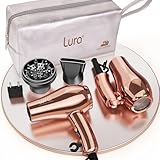
LURA Dual Voltage Travel Hair Dryer with Diffuser,Travel Blow Dryer Mini with EU Plug and UK Plug,Lightweight Portable Hairdryers with Folding Handle,1200W Compact Small Blowdryers for Women | Check Price On Amazon |
This guide covers cornrows, box braids, flat twists, starter locs, mature locs, sisterlocks, and microlocs. You will find flattening methods, cap types, wig constructions (lace front, glueless, 360 lace, headband), adhesive safety, and scalp care, with measurements and product specs for each.
Can You Wear a Wig Over Dreadlocks or Braids?
Yes: wearing a wig over dreadlocks or braids is safe and widely practiced, provided the base is flattened to under 0.5 inch (13 mm) of lift, the cap has adjustable straps or large-cap sizing, and no extra tension is placed on the edges. Locs and braids are already protective styles. A wig adds a second layer of protection against daily manipulation, sun, and weather.
This pairing is standard practice among stylists working with textured-hair clients who want to grow out natural hair or protect a retwist between appointments. Low-manipulation styling is consistently described in dermatology guidance as a strategy that reduces breakage, on the condition that styles are not installed tightly.
The only real differences from wearing a wig over loose hair are compression and care frequency. A loc or braid base needs a flatter pattern, a more breathable cap, and a scalp cleansing routine that works through the wig, not around it.
The permission is already granted. What decides success or failure is which base style you choose and how flat you can get it.
Which Base Style Works Best Under a Wig: Cornrows, Box Braids, or Dreadlocks?
Flat cornrows give the flattest profile under a wig, roughly 0.25 inch (6 mm) of lift, and they are the professional standard under lace fronts. Box braids flatten well when rebraided into 6 to 8 cornrows or wrapped in a halo; mature dreadlocks need a basket weave wrap and often a 23.5 inch large cap; sisterlocks and microlocs flatten almost as easily as loose hair due to their small diameter.
Braiding educators and wig installation stylists converge on the same guidance: the fewer and thicker your base braids, the taller the profile, and the more the wig sits away from the scalp. That is why 8 to 10 small cornrows always outperform 4 thick ones.
Use the table below to match your current protective style to the flattest possible base before choosing a wig.
| Base style | Profile under cap | Flattening method | Friction risk | Redo interval | Best wig pairing |
|---|---|---|---|---|---|
| Flat cornrows (6-10) | ~0.25 in (6 mm) | Direct braid-down | Low | 3-4 weeks | Any glueless or lace front |
| Box braids (medium) | 0.5-1 in | Rebraid into cornrows or halo wrap | Medium | Refresh every 4-6 weeks | Glueless closure or headband wig |
| Flat twists | 0.25-0.5 in | Direct, fast install | Low | 2-3 weeks | Closure wigs, glueless caps |
| Mature dreadlocks | 0.75-1.5 in | Basket weave wrap plus pins | Medium-high (fiber frizz) | Rewrap weekly | Large-cap glueless or 360 lace |
| Starter locs (coil stage) | 0.25-0.5 in | Satin wrap plus liner cap | Low-medium (fuzz friction) | Retwist every 4-6 weeks | Satin-lined cap, glueless |
| Sisterlocks / microlocs | ~0.25 in | Wrap like loose hair | Low | Retighten every 4-8 weeks | Nearly all wig types |
Jumbo braids and thick locs are the two bases that genuinely need a large cap size. Everything else fits average sizing once the pattern is right.
Base choice solves half the problem. The other half is understanding what physically happens between your base and the wig cap.
What Happens Under the Cap When a Wig Sits on Locs or Braids?
Three forces act on your hair under a wig: vertical bulk that lifts the cap and shifts the wig’s center of gravity backward, friction between cap fabric and your hair fibers, and tension compounding at the edges where a braid-down and a wig band press the same follicles. Controlling those three forces is the whole method.
Bulk is geometry. Every ridge of braid or folded loc adds height, and a wig anchored high at the crown slides back with head movement because the cap no longer grips the skull’s curve evenly.
Friction is a fiber problem. Looped locs and braid fuzz catch against nylon cap interiors, which raises frizz on starter locs and can roughen human-hair-looking braid extensions over weeks of wear.
Tension is the health risk. Traction alopecia, meaning gradual hairline loss from chronic pulling, develops when a tight braid base and a tight elastic wig band load the same edge follicles day after day; the failure mode is thinning at the temples that takes months to regrow.
Moisture is the fourth factor most wearers miss. Dense locs hold water for 8 to 24 hours after washing, and sealing a damp base under an occlusive cap creates the warm, wet environment in which odor and folliculitis, inflamed hair follicles, develop.
Every fix in the rest of this guide targets one of these four mechanisms: flatten the bulk, line the friction, loosen the tension, and manage the moisture.
Can I Wear a Wig Over Starter Locs That Are Only a Few Months Old?
Yes, and wig wear during the first 6 to 12 months of a loc journey can actually help starter locs lock faster, because it removes daily combing and manipulation. The two rules are friction control and a fully dry base: use a satin-lined cap, never go over damp coils, and skip adhesives anywhere near the hairline fuzz that is still locking.
Starter locs in the coil or comb-coil stage are held together by pattern memory rather than mature interlocking, so repeated rubbing against a nylon cap interior can loosen ends and blur parts. A satin-lined wig cap is the simple fix: the slippery weave lets coils rest instead of catch.
Locticians who work with first-year clients commonly suggest low-manipulation protective styling through this exact stage. A wig worn 5 days a week and removed nightly fits that standard as long as edges stay loose and the cap is washed weekly.
Starter locs are the most forgiving base in this entire guide. Dense mature locs and fine sisterlocks sit at opposite ends of the flattening challenge.
Can You Wear a Wig Over Sisterlocks, Microlocs, or Very Long Locs?
Yes: sisterlocks and microlocs are among the easiest bases under a wig because their small diameter (often 2-4 mm) lies flat with a silk wrap, while waist-length mature locs flatten well with an accordion fold or basket weave at the nape. The only real adjustment is cap size: very dense loc sets often need 23.5 inch large-cap wigs with adjustable straps.
Long locs add weight more than height. A full head of mature locs can weigh several pounds, so lightweight machine-wefted caps and headband wigs are kinder to your neck than heavy full-lace constructions on top of already substantial hair.
Very long braids fold the same way as long locs: accordion-fold at the nape, pin flat with the bulk stacked horizontally, and double-check the crown silhouette from the side before the wig goes on.
Once the base type is understood, the flattening process itself becomes a repeatable 20 to 45 minute routine.
How to Flatten Dreadlocks or Braids Under a Wig: Step-by-Step Guide
The flattest wig base comes from braiding or wrapping the hair into 6 to 10 thin sections that follow the scalp’s curve, with all ends folded toward the nape rather than stacked at the crown. Done correctly, the head silhouette rises no more than 1 inch at any point, which is inside what an adjustable wig cap can absorb.
If your hair is long or thick and the wig still sits high after braiding down, the pattern is usually the issue, not the cap; these same ways to flatten a bulky base under a wig apply to locs with one extra step, the basket weave wrap.
Work through the 6-step process below the first few times until the wrapping pattern becomes automatic.
STEP-BY-STEP GUIDE
How to Flatten Locs or Braids Under a Wig Cap
6 steps · Estimated time: 20 to 45 minutes depending on loc density and length
Start with fully dry hair
Wash locs or braids 24 to 48 hours before wig days. Dense locs can hold moisture up to 24 hours, and sealing a damp base under a cap invites odor and scalp irritation.
Divide into 6 to 10 sections
More sections mean thinner, flatter plaits. Keep every section under 0.5 inch (13 mm) thick so no single ridge lifts the cap.
Braid or wrap each section flat against the scalp
Use cornrows for braids and twists. For dreadlocks, use a basket weave: cross locs over each other row by row so they lie along the head’s curve instead of coiling in circles.
Fold all ends toward the nape and pin flat
Ends tucked at the crown double the height exactly where wigs sit highest. A jumbo bobby pin through each fold holds the wrap without catching cap fabric.
Pull on a breathable mesh cap from nape to forehead
Mesh and bamboo caps compress with airflow; thick nylon caps flatten but trap sweat. Smooth any loose fuzz under the cap as you go so nothing creates pressure points.
Layer the wig grip, then check the side profile
Look at your head from the side in a mirror before the wig goes on. The silhouette should rise no more than 1 inch (25 mm) anywhere; if the crown is higher, re-fold the ends and re-pin.
The whole routine comes down to thin sections, ends at the nape, and a dry base. If the wig still looks raised after this, the braiding pattern was almost always too thick.
Why Does My Wig Look Bulky at the Crown Even After I Braid My Hair Down?
Crown bulk under a wig almost always comes from one of four causes: cornrows thicker than 0.5 inch (13 mm), plait ends folded at the crown instead of the nape, a base pattern that crosses at the top of the head, or a wig cap one size too small that rides up. Rebraiding into 8 to 10 thinner sections fixes roughly 80 percent of cases.
Thick cornrows act like speed bumps. Four fat braids create four ridges the cap bridges across, while ten thin braids compress into a surface that reads as scalp through a 130 to 150 percent density wig, where density means the amount of hair knotted per square inch of cap.
The second fix is density itself: 150 percent density disguises residual base texture far better than 130 percent, while 180 percent hides everything but adds its own weight and heat.
If neither braiding thinner nor raising density solves it, measure your head circumference. A 23.5 inch head in a 22.5 inch cap will always ride up at the crown regardless of how flat the braid-down is.
How Do I Stop My Wig From Sliding Back When I Wear It Over Braids?
A wig slides back over braids because crown bulk shifts the cap’s grip point upward and a smooth liner reduces friction, so the fix is mechanical: wear a velvet or silicone wig grip band, tighten the adjustable straps one notch, and flatten the base to under 1 inch of total lift. Combs at the temples help; combs at the nape on top of loc bulk do not.
A velvet wig grip band is a fabric headband worn behind the hairline whose nap grabs both the wig cap and your liner in one direction only, which is why it anchors without touching glue.
Key Specifications:
- Material: velvet top with silicone or gel underside
- Width: 1.5 to 2.5 inches, worn behind the hairline
- Cost: $8 to $20 for adjustable versions
- Heat note: adds no occlusive layer over the scalp itself
Wig installation stylists treat the grip band as the default first fix for slippage before recommending any adhesive, because it removes the sliding force instead of gluing against it. Elastic bands sewn inside the cap, sold as glueless bands, achieve the same result for daily wearers.
Once the wig stops moving, the next decision is which wig construction actually deserves to sit on your base.
The Best Wig Types and Cap Constructions for Locs and Braids
Glueless wear-and-go wigs with a pre-attached elastic band are the best construction for locs and braids because they install in under 5 minutes with zero adhesive on the edges, and most average 22.5 inch caps stretch to fit a braided base. For dense mature locs, look specifically for large-cap (23.5 inch) glueless or 360 lace options from retailers like Luvme and UNice that list cap circumference in the specs.
Headband wigs are the most forgiving over bulky bases because the headband hides the front edge entirely; 13×4 lace fronts give the most natural hairline but demand the flattest cornrow base; U-parts need leave-out hair and generally do not suit loc bases at all; full lace breathes well but usually needs glue, which edges under braids do not appreciate.
Guidance on glueless wig options built for natural hair covers cap types that protect edges during daily wear, and shoppers with tightly coiled bases should also look at breathable wigs designed to sit over 4c hair for cap ventilation specs.
A glueless human hair lace front wig with an adjustable elastic band is the default recommendation for most readers of this post.
Key Specifications:
- Cap: glueless wear-and-go with elastic band and 3 to 4 combs
- Density: 150 percent reads as natural fullness and hides base texture
- Lace: 4×4 or 5×5 closure for simplest upkeep; 13×4 for styling freedom
- Price: $120 to $350 for beginner-grade human hair
- Install time: under 5 minutes once the base is flat
The right pick depends on your exact base style, so use the tabbed guide below to jump straight to your hair.
TABBED GUIDE
Wig Guidance by Your Base Style
Select the style currently on your head for tailored fit, cap, and care recommendations.
Flatten with a basket weave wrap, then size up the cap
Mature locs cross over each other row by row in a basket weave and pin flat at the nape, which keeps lift near 0.5 to 1 inch. Dense sets usually need a 23.5 inch large cap with adjustable straps, and lightweight machine-wefted caps sit more comfortably than full-lace units over heavy locs. Retwist on wig-free weekends and never install over damp locs, since a full dry can take 8 to 24 hours.
For nine out of ten readers, a 150 percent density glueless closure wig on a cornrow base is the lowest-effort, lowest-risk setup in this entire guide.
Do I Need a Wig Cap Over Dreadlocks, or Can I Skip It?
You can skip the liner cap for short outings, but a liner is strongly recommended for regular wear because it reduces friction frizz on loc fibers, keeps base oils and products off the wig’s interior, and extends the time between wig washes. Mesh and bamboo caps breathe best, nylon gives the smoothest surface, and satin-lined caps are the default for starter locs.
The liner also changes hygiene math: without one, scalp oils transfer straight into the wig cap and the interior needs cleansing far more often. A pack of breathable mesh wig caps costs $6 to $12 and lasts months with weekly washing.
Choosing between cap materials for longer hair is its own decision, and the details on which wig cap designs keep long hair genuinely flat apply to thick loc bases as well.
The cap is cheap insurance for both your hair and your wig. Adhesives, on the other hand, need a firmer set of rules.
How Long Can You Keep a Braid-Down or Loc Wrap Under a Wig Before Redoing It?
A cornrow braid-down lasts 3 to 4 weeks under regular wig wear and should be redone by 6 weeks at the latest; a loc wrap needs rewrapping weekly, and full retwists hold their schedule of every 4 to 6 weeks. Redo sooner if you see more than 1 inch of new growth at the roots, persistent itching, odor, or frizz breaking the base pattern.
Stylists who maintain clients under wigs use new growth as the measuring stick: once roots loosen past about an inch, cornrows stop lying flat and start creating uneven tension, which defeats the protective purpose. Daily exercise or heavy sweating shortens every interval by roughly a week.
Loc wraps sit at the other extreme, since the wrap only holds the shape for a few days of cap compression. Re-wrapping takes 15 to 20 minutes once the basket weave pattern is familiar, and it doubles as a check for lint or buildup at the roots.
Treat the base like a style with an expiration date, because the comfort and fit of the wig depend on it staying fresh.
Wig Caps, Grip Bands, and Adhesives That Work Over Textured Bases
The working toolkit for a wig over locs or braids has three parts: a breathable liner cap for friction, a grip band for anchoring, and adhesives reserved strictly for skin at the hairline, never for the braided or loc’d hair itself. Adhesive on braid fuzz or loc fibers creates a removal problem that costs edges.
If you do bond the hairline, map the glue onto skin about 1/4 inch in front of the hairline with a rat tail comb, and keep every bead of product off the hair. Hold times of 1 to 2 weeks per application are typical for professional adhesives.
Products like Ghost Bond XL adhesive are built for lace-to-skin contact only.
Key Specifications:
- Hold time: 1 to 2 weeks per application on prepared skin
- Removal: 70 percent isopropyl alcohol or an oil-based adhesive remover
- Skin prep: cleanse, alcohol wipe, then a scalp protector barrier
- Never apply to: braided extensions, locs, or hairline fuzz
For edges themselves, a pea-sized amount of edge control gel smooths baby hairs over a braid-down without any bonding product. Glueless elastic bands inside the cap remove the need for glue entirely on daily-wear rotations.
The rule is short: adhesive touches skin, fabric touches hair. The next section explains why breaking that rule costs real hair.
Can You Use Lace Glue or Wig Tape When You Have Braids or Locs Underneath?
Yes, but only on bare skin in front of the hairline: lace glue and wig tape bond to skin, and any adhesive that seeps onto braid fuzz or loc fibers hardens around them, forcing an alcohol-saturated comb-out that snaps edges. If the front of your base sits within a quarter inch of the lace, switch to a glueless band instead.
The removal chemistry is the issue. Standard removers are 70 percent isopropyl alcohol or oil-based solvents, and the Cosmetic Ingredient Review panel, whose assessments are published at cir-safety.org, has found isopropyl alcohol acceptable for these limited skin-contact uses, but soaking braided hairline fibers in it to release trapped glue causes dryness and mechanical breakage at the weakest point of the hair.
Wig tape follows the same rule with a cleaner edge: double-sided tape tabs press onto skin and peel off without solvent on the hair. For a lace front worn 2 weeks at a time over cornrows, tape plus a grip band is the lowest-risk secure install.
Adhesives are optional when the cap is engineered to hold without them, which is why glueless constructions dominate recommendations for loc wearers.
Does Wearing a Wig Over Dreadlocks or Braids Cause Hair Loss or Breakage?
Wearing a wig over locs or braids does not inherently cause hair loss; the documented risk is traction alopecia, meaning slow hairline loss from chronic tension, and it develops when a tight braid base, a tight elastic wig band, and edge adhesives all load the same follicles at once. Loosen any one of the three and the risk drops accordingly.
The mechanism is straightforward: follicles pulled at a constant angle develop perifollicular inflammation, and over months the follicle miniaturizes, which is why the American Academy of Dermatology lists tightly pulled styles and repeated tension among avoidable hair-loss causes. The failure mode is temple thinning that takes 6 to 12 months of low-tension styling to regrow.
Warning signs are specific: tenderness after install day, bumps along braided edges, or loosened locs at the hairline. The National Alopecia Areata Foundation recommends professional evaluation for any patchy or persistent loss rather than self-diagnosis.
The deeper question of whether wig wear itself contributes to hair loss gets a full treatment elsewhere on this site; the honest summary is that technique determines the outcome, not the wig. Keep braids snag-free, the band snug rather than tight, and the glue on skin only.
Caring for Your Scalp, Locs, and Braids While Wearing a Wig Regularly
Scalp care under a wig follows a 7 to 14 day cleansing cycle using diluted sulfate-free shampoo applied through a nozzle bottle directly to the scalp, followed by complete drying before the cap goes back on. Between washes, a light braid spray mist 3 to 4 times a week keeps the base flexible without soaking it.
Dense locs and cornrowed hair stay covered for long stretches, and research published in the International Journal of Trichology links prolonged occlusive styling with higher rates of folliculitis and seborrheic irritation when scalp cleansing lapses. The condition that triggers problems is moisture plus time, not the wig itself.
An applicator bottle with a thin nozzle delivers shampoo between cornrow rows without disturbing the pattern, and a residue-free loc shampoo prevents buildup that regular formulas leave in dense sections.
Daily maintenance is a 30-second mist of braid sheen spray on the base and a drop of tea tree scalp oil on any itchy spots. A wig stand airing overnight keeps the cap interior dry between wears.
New wearers who want the full maintenance picture beyond the base itself will find it in this complete guide to buying, wearing, and caring for wigs, which pairs well with everything here. Care makes the difference between a wig that protects your locs and one that quietly works against them.
Will Sleeping in a Wig Over My Braids or Locs Damage Them Overnight?
Occasionally sleeping in a wig over braids does no lasting harm, but regular overnight wear shortens the life of both the base and the wig: friction against cotton pillowcases raises frizz on braid fuzz and loc surfaces, and the lace and knots shed faster under head pressure. Removing the wig nightly and covering the base with a satin bonnet is the standard that protects both investments.
The failure mode is gradual rather than dramatic, which is why it gets ignored: after roughly 2 to 4 weeks of habitual overnight wear, cornrows lose their flat pattern, starter locs loosen at the parts, and a human-hair wig can shed noticeably more at the nape.
If overnight wear is unavoidable, an extra-large satin bonnet over the wig cuts friction sharply, and a satin pillowcase is the backup layer. Long locs do best in a loose top pile inside the bonnet rather than pressed flat against the pillow.
Your base survives the night fine; it is the repetition that erodes it. Treat overnight wear as the exception, not the system.
Should You Take Out Your Locs or Braids Just to Wear Wigs?
No: locs and braids are fully compatible with wig wear, and removing a protective base to wear wigs usually means trading a low-manipulation setup for a higher-maintenance one. The only scenario where removal makes sense is a permanent style change, since wig compatibility problems are solved with flattening patterns and cap sizing, not with sacrificng the hair underneath.
Locs represent months to years of growth investment, and a wig lets you change length, color, and texture over that investment without touching it. Braid bases cost even less to keep: a $30 to $60 redo every month is cheaper than the products loose natural hair consumes under daily wig wear.
For readers building wig wear into their routine long term, this site also covers whether daily wig wear contributes to hair loss, which constructions stay comfortable through a full day of wear, and the specific features that make a wig read as real hair.
Keep the base, flatten it right, and let the wig do the styling work.
The Bottom Line
You can wear a wig over dreadlocks or braids safely and comfortably: flatten the base to under 1 inch of lift, match cap size to your measured head circumference (22.5 inches average, 23.5 inches large for dense locs), and keep adhesive on skin only.
The three habits that protect everything underneath are simple: refresh cornrows every 3 to 4 weeks, cleanse the scalp every 7 to 14 days, and remove the wig at night. Start with your current style in the tabbed guide above, and your next install will sit flatter than the last one.
| Photo | Popular Hair Product | Price |
|---|---|---|
|
|
Kkioor 24 Inch Chocolate Brown Human Hair Wig 200 Density Body Wave Lace Front Wigs Human Hair Pre Plucked 13X4 HD Frontal Wig 4# Colored Brown Wig For Women Glueless Wigs | Check Price On Amazon |
|
|
KingSup 613 Lace Front Wig Human Hair Pre Plucked 250 Density 26 Inch 5x5 HD Lace Closure Straight Blonde Wig Human Hair, 100% Real Human Hair without Synthetic Blend Tangle Free Triple Lifespan 3X | Check Price On Amazon |
|
|
WIGCHIC 16" Kinky Curly Half Wig Human Hair Burgundy & Dark Roots | Flip-Over Drawstring | Seamless 4C Hairline | True Length | 3-in-1 Styling | Beginner Friendly (T1B/99J) | Check Price On Amazon |
|
|
Hair Removal Cream for Men & Women: Painless Depilatory for Sensitive Skin & Intimate Areas, Moisturizing with Aloe Vera & Vitamin E, Safe for Face, Underarms, Bikini, Arms (3.7 Fl Oz (Pack of 2)) | Check Price On Amazon |
|
|
ZOOLY PROFESSIONAL Ginger Shampoo and Conditioner Sets 20.3 Fl Oz- Anti Hair Loss and Nourishes Hair Roots, Salon Level Scalp Care for Men and Women | Check Price On Amazon |
|
|
LUSN Baby Hair Clippers with Vacuum, Quiet Hair Trimmers for Kids, IPX7 Waterproof Rechargeable Cordless Haircut Kit for Baby Children Infant | Check Price On Amazon |
|
|
LURA Dual Voltage Travel Hair Dryer with Diffuser,Travel Blow Dryer Mini with EU Plug and UK Plug,Lightweight Portable Hairdryers with Folding Handle,1200W Compact Small Blowdryers for Women | Check Price On Amazon |