360 Lace Wig vs Full Lace Wig: Which Gives More Versatility?


A 360 lace wig gives you a high ponytail. A full lace wig gives you a middle part on Tuesday and a deep side part on Wednesday and a zigzag part on Friday without anyone seeing the difference. The choice between them comes down to one question: do you change your part more often than you wear your hair up?
Most buyers get this backward. They buy a full lace wig for updos when a 360 lace wig costs $50 to $150 less and handles ponytails and buns with the same invisible hairline. This guide covers the real versatility difference between 360 lace and full lace wigs, with specific measurements, lace type comparisons, and the styling limits each construction places on your daily wear.
| Photo | Popular Hair Product | Price |
|---|---|---|

|
Kkioor 24 Inch Chocolate Brown Human Hair Wig 200 Density Body Wave Lace Front Wigs Human Hair Pre Plucked 13X4 HD Frontal Wig 4# Colored Brown Wig For Women Glueless Wigs | Check Price On Amazon |

|
KingSup 613 Lace Front Wig Human Hair Pre Plucked 250 Density 26 Inch 5x5 HD Lace Closure Straight Blonde Wig Human Hair, 100% Real Human Hair without Synthetic Blend Tangle Free Triple Lifespan 3X | Check Price On Amazon |
|
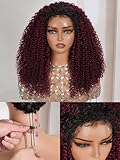
WIGCHIC 16" Kinky Curly Half Wig Human Hair Burgundy & Dark Roots | Flip-Over Drawstring | Seamless 4C Hairline | True Length | 3-in-1 Styling | Beginner Friendly (T1B/99J) | Check Price On Amazon |

|
Hair Removal Cream for Men & Women: Painless Depilatory for Sensitive Skin & Intimate Areas, Moisturizing with Aloe Vera & Vitamin E, Safe for Face, Underarms, Bikini, Arms (3.7 Fl Oz (Pack of 2)) | Check Price On Amazon |

|
ZOOLY PROFESSIONAL Ginger Shampoo and Conditioner Sets 20.3 Fl Oz- Anti Hair Loss and Nourishes Hair Roots, Salon Level Scalp Care for Men and Women | Check Price On Amazon |

|
LUSN Baby Hair Clippers with Vacuum, Quiet Hair Trimmers for Kids, IPX7 Waterproof Rechargeable Cordless Haircut Kit for Baby Children Infant | Check Price On Amazon |
|
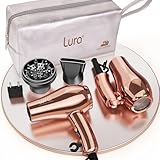
LURA Dual Voltage Travel Hair Dryer with Diffuser,Travel Blow Dryer Mini with EU Plug and UK Plug,Lightweight Portable Hairdryers with Folding Handle,1200W Compact Small Blowdryers for Women | Check Price On Amazon |
What Is a 360 Lace Wig and How Does the Lace Perimeter Actually Work?
A 360 lace wig has a sheer lace panel that runs the entire circumference of the head, measuring approximately 2 to 4 inches from the hairline inward. The crown and center of the cap use machine-wefted material with adjustable straps and combs for security.
The lace perimeter is what gives a 360 lace wig its signature advantage: you can pull the hair into a high ponytail, top knot, or half-up style and the lace edge remains invisible against your skin along the entire hairline. This is not possible with a standard lace front wig, where only the front 13×4 or 13×6 inches use lace and the remaining three-quarters of the hairline show a visible wefted edge if pulled up.
The wefted crown area does create one limitation. You cannot part the hair in the center-back or crown area and expose scalp, because the wefted material looks like fabric, not skin. The parting area is limited to the lace perimeter zone around the front, sides, and back edges.
For a deeper breakdown of how full lace construction differs from lace front designs, our guide on full lace wig construction explains every cap type with detailed technical specifications.
By the Numbers
360 Lace vs Full Lace — Key Specifications
Sources: manufacturer technical sheets, licensed cosmetologist installation guides
What Is a Full Lace Wig and Why Does 100% Lace Coverage Matter?
A full lace wig uses a cap made entirely of sheer lace material from edge to edge. Every square inch of the cap is hand-tied or machine-tied lace, typically Swiss lace at 0.5 to 0.6mm thickness or HD lace at 0.3 to 0.4mm thickness depending on the manufacturer.
This complete lace coverage creates one unique capability no other wig type offers: you can create a part absolutely anywhere on your head and the scalp will show through the lace. Middle parts, deep side parts, zigzag parts, three-way parts. All of them look like natural scalp because lace is under every single parting location.
The trade-off is structural. Full lace caps are more delicate than 360 lace caps because the entire unit is sheer material. Daily wear, removal, and adhesive application stress the full lace surface, not just the perimeter. A 360 lace wig concentrates wear stress on the lace perimeter while the wefted crown handles the bulk of daily handling without tearing.
360 Lace Wig vs Full Lace Wig: Detailed Side-by-Side Versatility Comparison
Use the table below to compare every versatility factor between 360 lace and full lace wigs before making your purchase decision.
Product Comparison
360 Lace Wig vs Full Lace Wig — Versatility Side by Side
Detailed feature comparison to help you choose based on your daily styling habits.
| Feature | 360 Lace Wig | Full Lace Wig |
|---|---|---|
| High ponytail or updo | Yes — lace perimeter hides entire hairline | Yes — full lace hides all edges |
| Part anywhere on head | No — only within lace perimeter zone | Yes — part at any spot on entire scalp |
| Lace thickness (typical) | Swiss lace 0.5-0.6mm or HD 0.3-0.4mm at perimeter | Swiss lace 0.5-0.6mm or HD 0.3-0.4mm throughout |
| Durability with daily wear | Higher — wefted crown absorbs handling stress | Moderate — full lace surface is more delicate |
| Bleaching knots required | Perimeter lace zone only | Entire cap surface requires knot bleaching |
| Price range (human hair) | $80 to $250 | $150 to $500 and above |
| Lifespan with proper care | 12 to 24 months | 12 to 36 months (with delicate handling) |
| Best use case | Updos and ponytails with a fixed part preference | Maximum daily part flexibility and styling freedom |
Prices are current estimates for human hair units from reputable vendors. Synthetic versions cost 40 to 60 percent less across both categories.
Which Wig Type Lets You Part Your Hair in More Ways?
A full lace wig allows you to part your hair at any point on your entire scalp. The lace extends under every square inch of the cap. A middle part on Monday, a deep left side part on Tuesday, a zigzag part on Wednesday. Each one exposes lace with bleached knots that mimic natural scalp regardless of position.
A 360 lace wig limits parting to the lace perimeter zone. This zone extends approximately 2 to 4 inches inward from the hairline all around your head. You can create a middle part, side part, or any variation within the front lace area. You cannot part the hair at the crown or center-back and expose scalp, because those areas are machine-wefted material that looks like fabric.
This parting difference is the single most important versatility distinction between the two wig types. If you wear the same part every day and rarely deviate, a 360 lace wig gives you everything you need. If you change your part multiple times per week or want the freedom to experiment with different part placements, a full lace wig is the only construction that supports that.
For a complete side-by-side of lace front versus full lace construction and which is right for different lifestyles, our lace front vs full lace comparison guide walks through every cap type and installation method.
Can You Wear a High Ponytail With Both Wig Types?
Yes. Both 360 lace and full lace wigs support high ponytails, top knots, buns, and half-up styles. The key requirement for any updo on a wig is that lace extends to cover the entire hairline that becomes exposed when hair is pulled upward.
A 360 lace wig meets this requirement because lace runs the full circumference of the head. When you gather the hair into a high ponytail, every edge that shows is lace, not wefted material. The result is an undetectable hairline from every angle. A full lace wig also meets this requirement because lace covers the entire cap surface including all edges.
A standard lace front wig fails this test. Only the front 13×4 or 13×6 inch section uses lace. The sides and back use wefted material that becomes visible and obvious when hair is pulled up. This is the reason 360 lace wigs were developed: to solve the updo limitation of lace front wigs without the full price of a full lace unit.
How Lace Type Affects the Versatility of Both Wig Styles
The type of lace on your wig determines how invisible the hairline looks against your specific skin tone. Swiss lace at 0.5 to 0.6mm thickness provides a good balance of transparency and durability for most wearers. HD lace at 0.3 to 0.4mm is thinner and more transparent, blending better on lighter skin tones but tearing more easily with daily adhesive use.
French lace at 0.8 to 1.2mm is the thickest option. It handles daily wear and repeated glue application better than Swiss or HD lace. The trade-off is visibility. French lace shows more texture on the skin and requires more thorough bleaching and tinting to look natural, especially on fair to medium skin tones.
This happens because lace transparency is a function of both thickness and fiber diameter. Thinner lace fibers scatter less light and create fewer visible texture lines against the skin. The condition for HD lace to look fully invisible is a close color match between the lace tint and your scalp tone. If the tint is off by even one shade, HD lace actually looks more visible than properly tinted Swiss lace at the same installation.
Both 360 lace and full lace wigs are available in all three lace types. The choice of lace type affects both wig styles equally. A 360 lace wig with HD lace at the perimeter will have an equally invisible hairline as a full lace wig with the same HD lace. The difference is only in where that lace extends, not in how it performs at any given spot.
Installation Time and Skill Level: Which Wig Demands More From You?
A 360 lace wig requires adhesive application around the entire hairline perimeter. You need to apply lace wig adhesive like Ghost Bond XL or a Got2B Glued freeze spray along the front hairline, both sides, and the nape area. Plan for 30 to 45 minutes for a full perimeter glue installation.
A full lace wig requires adhesive application across the entire cap surface if you want complete security. Many wearers apply glue only to the perimeter and use a wig grip band for the crown area to reduce adhesive contact with the full lace surface. A full perimeter and crown glue installation on a full lace wig takes 45 to 60 minutes.
Glueless installation is possible with both wig types if the cap includes adjustable straps and combs. A velvet wig grip band provides nonslip security without adhesive for both 360 lace and full lace wigs. The wig cap itself must fit your head circumference correctly for glueless wear to work.
For proper wig cap preparation before any installation method, our step-by-step guide on putting on a wig cap correctly covers skin prep, cap placement, and securing methods.
Step-by-Step Guide
How to Install a 360 Lace Wig for Maximum Versatility
7 steps · Estimated time: 30 to 45 minutes
Cleanse your hairline with 70% isopropyl alcohol
Oil, moisturizer, and product residue break down adhesive within hours. Clean the entire perimeter hairline thoroughly and wait 2 minutes for skin to dry completely.
Apply wig cap and secure your natural hair flat
Braid your natural hair in cornrows or flat twists. Position the wig cap so it covers all natural hair at the perimeter. No natural hair should peek out at the hairline.
Apply a thin layer of adhesive to your skin perimeter
Use a thin-tip applicator brush for precision. Apply adhesive in a 1-inch wide strip along the front hairline, sides, and nape. Let it dry until tacky (approximately 3 to 5 minutes depending on humidity).
Position the wig and press the lace into the adhesive
Align the front lace edge with your natural hairline first. Press the lace into the tacky adhesive working from front to sides to back. Use a rat-tail comb to press the lace edge firmly into the glue line.
Tie down the perimeter with a scarf for 10 to 15 minutes
Wrap a satin or silk scarf tightly around the entire hairline perimeter. This presses the lace flat against the adhesive and ensures a seamless bond. Do not skip this step.
Style your baby hairs for a natural hairline finish
Use a strong-hold edge control gel and a fine-tooth edge brush to shape baby hairs along the front and side hairlines. This step customizes the hairline to your face shape.
Test the updo before leaving the house
Gather the hair into a high ponytail. Check every angle in a mirror. The lace perimeter should be invisible at the front, sides, and back. If any wefted material shows, adjust the placement or lower the ponytail.
360 Lace Wig vs Full Lace Wig: Pros and Cons for Daily Wear
Both wig types serve different daily wear needs. The right choice depends on how often you change your part versus how often you wear your hair up.
Product Review
360 Lace Wig — Pros and Cons
Honest assessment based on verified buyer reviews and installation experience.
Pros
- ✓Supports high ponytails, buns, and all updo styles with invisible hairline from every angle
- ✓Costs $50 to $150 less than comparable full lace wigs from the same hair grade
- ✓Wefted crown absorbs daily wear stress and extends overall cap lifespan by 6 to 12 months vs full lace
- ✓Less lace surface area reduces knot bleaching time by approximately 60 percent vs full lace
- ✓Easier to install for beginners because adhesive is only on the perimeter, not the crown
Cons
- ✗Cannot part hair at the crown or center-back because those areas are wefted material, not lace
- ✗Parting flexibility is limited to the 2 to 4 inch lace perimeter zone around the front and sides
- ✗Wefted crown can feel warmer and less breathable than full lace in hot or humid weather
- ✗Fewer brand options than lace front wigs; narrower selection of colors and lengths
A 360 lace wig is the best value for anyone who wears updos regularly and keeps a consistent part placement. If you change your part frequently, the wefted crown becomes a daily limitation.
Product Review
Full Lace Wig — Pros and Cons
Honest assessment based on verified buyer reviews and installation experience.
Pros
- ✓Part hair at any spot on the entire scalp with natural scalp appearance through the lace
- ✓Change your part daily: middle, side, deep side, zigzag, three-way. Each looks like natural scalp.
- ✓Supports all updo styles including high ponytails and top knots with full hairline coverage
- ✓Maximum breathability because the entire cap is sheer lace with no wefted sections
- ✓Highest ceiling for styling creativity among all wig types on the market
Cons
- ✗Costs $150 to $500 or more for quality human hair, making it the most expensive wig type
- ✗Full lace surface is more delicate and prone to tearing with daily adhesive removal
- ✗Knot bleaching and lace tinting required across the entire cap, not just the perimeter
- ✗Longer installation time (45 to 60 minutes for full adhesive application)
A full lace wig is the only choice for someone who treats parting as a daily styling variable. The price premium pays for unlimited parting freedom that no other wig construction can match.
What Makes 360 Lace Wigs More Durable Than Full Lace Wigs?
A 360 lace wig lasts longer under daily wear because the machine-wefted crown absorbs the bulk of handling stress. When you brush, detangle, and style the wig, your hands and tools contact the wefted material more often than the lace perimeter. The wefted fabric handles this friction without tearing.
A full lace wig has no wefted stress relief zone. Every handling action contacts lace. Combing the crown area, adjusting the cap position, and removing adhesive all stress the full lace surface. This happens because the entire cap is a single layer of sheer material with no reinforced sections to distribute mechanical stress.
This structural difference translates to approximately 6 to 12 months of additional lifespan for a 360 lace wig compared to a full lace wig with identical care routines. The condition for a full lace wig to match 360 lace longevity is extremely gentle handling on every wear and removal, adhesive applied only to the perimeter, and use of a wig stand for all styling and detangling work.
For recommendations on the most durable full lace units and how to maximize their lifespan, our guide to the best full lace wigs for maximum styling versatility covers construction quality, lace type, and care protocols.
Cost Comparison: What Do You Actually Pay for the Extra Versatility?
A quality human hair 360 lace wig costs $80 to $250 from reputable vendors like Luvme Hair, UNice, and Isee Hair. A quality human hair full lace wig from the same vendors costs $150 to $500 or more depending on length, density (130 to 180 percent), and hair origin (Brazilian, Peruvian, Indian, Malaysian).
The price gap of $70 to $250 buys exactly one feature: the ability to part your hair anywhere on your head. That is it. Both wig types support updos equally well. Both use the same lace types. Both require similar installation time per square inch of adhesive area. The entire price premium goes toward parting flexibility on the crown and center-back areas.
For budget-conscious buyers who still want a natural look, our breakdown of what you can realistically get in a wig under $50 explains where corners get cut and which features are worth paying more for.
Value Analysis
When a Full Lace Wig Wins — and When a 360 Lace Wig Is the Smarter Buy
Performance gap between full lace and 360 lace construction by styling need
Full lace wins completely
Tied — both work equally
360 lace wins by 6 to 12 months
Full lace wins
360 lace wins at $50 to $150 less
Editorial assessment based on construction durability, styling capability, and verified buyer feedback. Not a sponsored ranking.
Knot Bleaching and Lace Tinting: The Hidden Labor Difference
Bleaching knots on a 360 lace wig means treating only the lace perimeter zone. This covers approximately 30 to 40 percent of the total hair knots on the unit. Use blue bleach powder mixed with 20 volume developer (6% hydrogen peroxide) applied for 15 to 20 minutes. Check every 5 minutes. Over-processing past 25 minutes on fine Swiss lace at 0.5 to 0.6mm thins the lace itself and increases tear risk.
Bleaching knots on a full lace wig means treating every knot on the entire cap. One hundred percent of hair knots require bleaching for the wig to look natural at any parting position. This takes approximately 2 to 3 times longer than a 360 lace wig and uses proportionally more bleach mixture. The risk of over-processing increases simply because the surface area is larger and keeping application timing consistent across the full cap is harder.
This happens because the bleaching agent (typically ammonium persulfate or potassium persulfate in powder bleach) oxidizes melanin in the hair knot and simultaneously degrades the lace fiber protein structure. The condition for safe bleaching is 20 volume developer at room temperature (68 to 72°F / 20 to 22°C) for no more than 20 minutes per section. If the ambient temperature exceeds 75°F (24°C), processing accelerates by 20 to 30 percent and timing must be reduced accordingly to prevent lace damage.
Lace tinting follows the same pattern. A 360 lace wig needs tint matched to your scalp tone on the perimeter lace only. A full lace wig needs the entire cap tinted because any untinted area becomes visible if you part the hair over it. Use a lace tint spray matched to your scalp shade or mix foundation with setting spray for a custom color match.
Which Wig Type Works Better for Different Hair Textures and Densities?
Both 360 lace and full lace wigs are available in all hair textures from silky straight to 4c coily and all density percentages from 130 percent (natural-looking) to 200 percent (very full). The wig type does not limit your texture or density choices. Hair origin (Brazilian, Peruvian, Indian, Malaysian) and density percentage are independent of cap construction.
The density choice affects how the cap construction performs. At 180 to 200 percent density, a 360 lace wig benefits from the wefted crown because the heavy wefting supports more hair weight without sagging. A full lace wig at 200 percent density places all that weight on a single layer of sheer lace, which can stretch over time and create a looser fit after 12 to 18 months of wear.
At 130 percent density, both wig types perform equally well because the hair weight is light enough that full lace handles it without stretching. For fine or low-density natural hair underneath, either cap type works comfortably. The deciding factor remains parting flexibility versus budget and durability preference.
Daily Maintenance: How Care Routines Differ Between the Two Wig Types
A 360 lace wig requires adhesive cleaning on the perimeter lace zone after each removal. Use lace adhesive remover on a cotton pad to dissolve glue residue along the front, sides, and back lace edges. Wash the full wig with sulfate-free wig shampoo every 7 to 10 wears to prevent product buildup on both the lace perimeter and the wefted crown.
A full lace wig requires adhesive cleaning across a larger lace surface area if glue was applied beyond the perimeter. The full lace material demands gentler handling during washing. Submerge the wig in cool water with sulfate-free shampoo, swish gently, and never scrub or wring the lace. Rinse with cool water and apply silicone-free conditioner from mid-shaft to ends only, keeping conditioner off the lace knots to prevent slippage.
Both wig types need a sturdy wig stand for drying and storage. Never store either wig type in a bag while damp. Moisture trapped against lace promotes bacterial growth and weakens the knot structure over time. Our comparison of the best wig stands covers tabletop and full mannequin options for proper drying and storage.
For a complete care routine from purchase to long-term maintenance, our complete guide to buying, wearing, and caring for wigs covers washing frequency, conditioning protocols, and storage best practices for every wig type.
Myth vs Fact
360 Lace and Full Lace Wigs — Common Myths Debunked
Separating fact from fiction on the most common misconceptions about lace wig versatility
✗ Myth
Full lace wigs are always better than 360 lace wigs for updos and ponytails.
✓ Fact
Both wig types support high ponytails and updos equally well. The 360 lace perimeter provides complete hairline coverage for updos at $50 to $150 less than a full lace wig with the same hair grade. The full lace advantage is parting anywhere on the head, not better updo performance.
✗ Myth
A 360 lace wig looks less natural than a full lace wig because the wefted crown is visible.
✓ Fact
The wefted crown on a 360 lace wig is completely hidden by the hair that covers it. Unless you part the hair at the crown and expose the scalp, the wefted area is never visible. The lace perimeter handles all visible hairlines (front, sides, back) and looks identical to full lace in those zones.
✗ Myth
You need professional installation for both 360 lace and full lace wigs to look natural.
✓ Fact
Both wig types can be installed at home with practice. A 360 lace wig is actually easier for beginners because adhesive application is limited to the perimeter. Many wearers achieve salon-quality results at home using a wig grip band and glueless installation after 2 to 3 practice sessions.
✗ Myth
Full lace wigs are too delicate for daily wear and will tear within months.
✓ Fact
A quality full lace wig on Swiss lace at 0.5 to 0.6mm lasts 12 to 36 months with proper care. The key is applying adhesive only to the perimeter (not the crown), using a wig grip band for the center, and always handling the lace gently during washing and styling. Full lace is delicate, not fragile.
✗ Myth
360 lace wigs cannot achieve a realistic scalp appearance through the lace.
✓ Fact
The lace perimeter on a 360 lace wig is identical to the lace on a full lace wig. When properly bleached and tinted, the scalp appearance through the lace perimeter is indistinguishable from a full lace wig. The only area that cannot show scalp is the wefted crown, which is always covered by hair.
Quick Reference
360 Lace and Full Lace Wigs — Key Terms Explained
Quick reference for the terms used throughout this guide
A wig with a sheer lace panel running the full circumference of the head (2 to 4 inches from the hairline inward), with a wefted crown center. Supports updos. Limited to parting within the lace perimeter zone.
A wig with a cap made entirely of sheer lace material from edge to edge. Allows parting at any spot on the entire scalp. More delicate and more expensive than 360 lace construction.
Lace material at 0.5 to 0.6mm thickness. Good balance of transparency and durability for most skin tones. The standard lace option on mid-range to premium wigs.
Ultra-thin lace at 0.3 to 0.4mm thickness. More transparent than Swiss lace and blends better on lighter skin tones. Tears more easily with daily adhesive use.
Thicker lace at 0.8 to 1.2mm. Most durable option for daily wear and repeated adhesive application. Shows more texture on skin and requires more thorough tinting.
Machine-sewn fabric material used in the crown area of 360 lace wigs. Durable and breathable but does not look like scalp. Cannot be used for parting that exposes the cap.
Process of lightening the dark knots where hair is tied to the lace using bleach powder and 20 volume developer (6% hydrogen peroxide) applied for 15 to 20 minutes. Makes knots less visible against the scalp.
The percentage of hair per square inch on the wig cap. 130% mimics natural average-density hair growth. 150% is full and voluminous. 180 to 200% is very full. Independent of cap construction type.
Applying color to the lace material to match the wearer’s scalp tone. Can use dedicated lace tint spray, foundation mixed with setting spray, or fabric dye for a permanent tint. Essential for an undetectable hairline.
A velvet or silicone band worn between the wig cap and the wig to provide nonslip security without adhesive. Enables glueless installation for both 360 lace and full lace wigs when cap fit is correct.
Interactive Tool
Which Wig Type Fits Your Styling Habits?
Answer 2 quick questions for a personalized recommendation based on your daily routine.
Buying Guide
Ask Yourself These Questions Before You Buy
Tap each card to reveal what your answer means for your wig purchase decision.
Why does my 360 lace wig show the wefted crown when I try to part it at the back?
The wefted crown on a 360 lace wig is machine-sewn fabric, not lace. Exposing it by parting the hair at the crown or center-back reveals fabric that looks nothing like scalp. The lace perimeter extends only 2 to 4 inches inward from the hairline.
This is by design, not a defect. The wefted material gives the wig structural durability and keeps the price $50 to $150 below full lace. If you want to part at the crown, you need a full lace wig with lace under that parting position. Check your 360 lace wig’s lace perimeter depth from the hairline inward to understand exactly where part placements work.
What is the difference between HD lace and Swiss lace on a 360 lace wig perimeter?
HD lace is 0.3 to 0.4mm thick. Swiss lace is 0.5 to 0.6mm thick. The 0.2mm difference creates a visible transparency gap on lighter skin tones. HD lace blends with less texture visible against fair and light-medium skin.
On medium to deep skin tones, properly tinted Swiss lace performs nearly identically to HD lace because the tint masks the slight texture difference. HD lace tears more easily during daily adhesive removal. For daily wear with glue, Swiss lace on the perimeter lasts longer. For special occasion wear or glueless installation, HD lace on a 360 perimeter gives the most undetectable hairline.
Can I swim in a 360 lace wig or full lace wig?
Yes, both wig types can be worn swimming with proper adhesive and preparation. Use a waterproof waterproof lace wig adhesive rated for submerged wear. Apply adhesive to the full perimeter and allow 24 hours of cure time before swimming.
Chlorine and salt water damage human hair wigs and weaken lace fibers over time. Rinse the wig thoroughly with cool water immediately after swimming. Apply leave-in conditioner to the hair only, avoiding the lace. Limit swimming in a human hair wig to occasional use. Synthetic wigs handle chlorine better but still need immediate rinsing.
Why does my full lace wig tear at the crown after a few months?
Crown tearing on a full lace wig comes from applying adhesive to the crown area and pulling the lace during removal. Full lace is 0.5 to 0.6mm thick at best (Swiss lace) and cannot handle repeated adhesive pulling at the same stress point.
Apply adhesive only to the perimeter. Use a wig grip band for the crown and center areas. When removing adhesive, work from the edges inward and never pull the lace upward against the bonded adhesive. If the crown has already torn, a professional wig repair service can patch the lace, but the repair will be visible at close range under certain parting angles.
How many times can I reuse a 360 lace wig before the lace perimeter shows wear?
A quality 360 lace wig on Swiss lace handles 8 to 14 days of continuous wear per installation with proper adhesive removal and reapplication. The lace perimeter shows first signs of wear (slight fraying at the hairline edge) after 6 to 8 months of daily wear with adhesive.
Glueless installation with a wig grip band extends lace perimeter life by 40 to 60 percent because no adhesive stress is applied to the lace edge. Rotate between two 360 lace wigs if you wear wigs daily to double the lifespan of each unit by giving the lace 24 hours of rest between wears.
What went wrong when my full lace wig installation looked obvious at the hairline?
Three factors cause an obvious full lace hairline: untinted lace that does not match your scalp, unbleached knots showing dark dots against your skin, and adhesive residue creating a shiny line at the lace edge. All three must be correct for an invisible result.
Bleach the knots with 20 volume developer for 15 to 20 minutes. Tint the lace with a spray or foundation that matches your scalp shade exactly. Clean any adhesive that seeps beyond the lace edge with a cotton swab before it dries. Properly done, the lace should disappear against your skin at a conversational distance of 2 to 3 feet.
Can I use a glueless method on a 360 lace wig for high ponytails that stay secure?
Yes. A glueless 360 lace wig with adjustable straps, combs, and a velvet wig grip band with silicone backing holds securely through high ponytails and active movement. The grip band must fit snugly around your full head circumference.
The wig cap itself must match your head measurements (typically 21.5 to 22.5 inches circumference for most adults). If the cap is too large, a high ponytail will pull the wig backward regardless of grip band quality. Measure your head circumference before ordering to ensure a secure glueless fit.
Is a 360 lace wig worth buying if I already own a lace front wig?
Yes, if you want to wear high ponytails and updos and currently cannot because your lace front wig shows wefted edges at the sides and back. A 360 lace wig solves the exact limitation that frustrates lace front wig owners the most.
Keep your lace front wig for down styles with your preferred part. Add a 360 lace wig for updo days. The two wig types complement each other perfectly. If you never wear your hair up and are satisfied with your lace front, the 360 lace wig adds no benefit.
What is the difference between a 360 lace wig and a 360 frontal with bundles?
A 360 lace wig is a complete unit with hair sewn onto a full cap that has a lace perimeter. A 360 frontal is a lace piece (typically 22 to 24 inches around the perimeter and 4 to 6 inches deep inward) that covers the entire hairline. Bundles of wefted hair are sewn onto the remaining crown area behind the frontal.
A 360 frontal with bundles requires custom construction by a stylist. Total cost with bundles and installation labor often exceeds a pre-made 360 lace wig. The advantage is complete customization of hair texture, density, and color. A pre-made 360 lace wig saves the construction labor and lets you wear it immediately.
Can I dye or bleach the hair on a 360 lace wig the same as a full lace wig?
Yes. The hair on both wig types is processed identically for coloring. Use professional bleach powder with 20 volume developer for lightening human hair wigs. Never use developer above 30 volume on wig hair because the strands are already processed and more vulnerable to protein degradation than growing hair.
The cap construction does not affect the hair’s ability to take color. Protect the lace from bleach contact by applying a barrier cream or conditioner to the lace before coloring the hair. Bleach on lace weakens the fibers and causes tearing at the lace-hair junction over multiple color services.
Which wig type handles heat styling better: 360 lace or full lace?
Both wig types handle heat styling equally because the hair fiber, not the cap, determines heat tolerance. Human hair wigs of either construction can be heat-styled at 300 to 400°F (149 to 204°C) with a heat protectant rated to 450°F (232°C) applied before each styling session.
Never exceed 450°F (232°C) on any human hair wig. The hair fibers degrade irreversibly above this temperature regardless of cap type. Synthetic wigs are heat-resistant up to 350 to 400°F (177 to 204°C) depending on the fiber quality. Check your specific wig’s heat rating before applying any hot tool.
The choice between a 360 lace wig and a full lace wig comes down to a single honest question: do you change your part more often than you wear your hair up? If updos are your priority and your part stays consistent, a 360 lace wig at $80 to $250 gives you every styling option you need with better durability and easier installation. If you treat your part as a daily styling variable and want the freedom to create any part anywhere, a full lace wig at $150 to $500 is the only construction that delivers that. Both wig types handle high ponytails, top knots, and buns with an invisible hairline. The price difference pays for one thing only: the ability to part your hair at the crown. Buy the wig that matches how you actually style your hair, not the one that sounds more premium on paper.
For your next step, measure your head circumference with a soft measuring tape at the hairline, check the lace perimeter depth on any 360 lace wig before purchasing, and if choosing full lace, decide between Swiss lace (0.5 to 0.6mm for durability) and HD lace (0.3 to 0.4mm for maximum transparency) based on your skin tone and how often you use adhesive.
| Photo | Popular Hair Product | Price |
|---|---|---|
|
|
Kkioor 24 Inch Chocolate Brown Human Hair Wig 200 Density Body Wave Lace Front Wigs Human Hair Pre Plucked 13X4 HD Frontal Wig 4# Colored Brown Wig For Women Glueless Wigs | Check Price On Amazon |
|
|
KingSup 613 Lace Front Wig Human Hair Pre Plucked 250 Density 26 Inch 5x5 HD Lace Closure Straight Blonde Wig Human Hair, 100% Real Human Hair without Synthetic Blend Tangle Free Triple Lifespan 3X | Check Price On Amazon |
|
|
WIGCHIC 16" Kinky Curly Half Wig Human Hair Burgundy & Dark Roots | Flip-Over Drawstring | Seamless 4C Hairline | True Length | 3-in-1 Styling | Beginner Friendly (T1B/99J) | Check Price On Amazon |
|
|
Hair Removal Cream for Men & Women: Painless Depilatory for Sensitive Skin & Intimate Areas, Moisturizing with Aloe Vera & Vitamin E, Safe for Face, Underarms, Bikini, Arms (3.7 Fl Oz (Pack of 2)) | Check Price On Amazon |
|
|
ZOOLY PROFESSIONAL Ginger Shampoo and Conditioner Sets 20.3 Fl Oz- Anti Hair Loss and Nourishes Hair Roots, Salon Level Scalp Care for Men and Women | Check Price On Amazon |
|
|
LUSN Baby Hair Clippers with Vacuum, Quiet Hair Trimmers for Kids, IPX7 Waterproof Rechargeable Cordless Haircut Kit for Baby Children Infant | Check Price On Amazon |
|
|
LURA Dual Voltage Travel Hair Dryer with Diffuser,Travel Blow Dryer Mini with EU Plug and UK Plug,Lightweight Portable Hairdryers with Folding Handle,1200W Compact Small Blowdryers for Women | Check Price On Amazon |